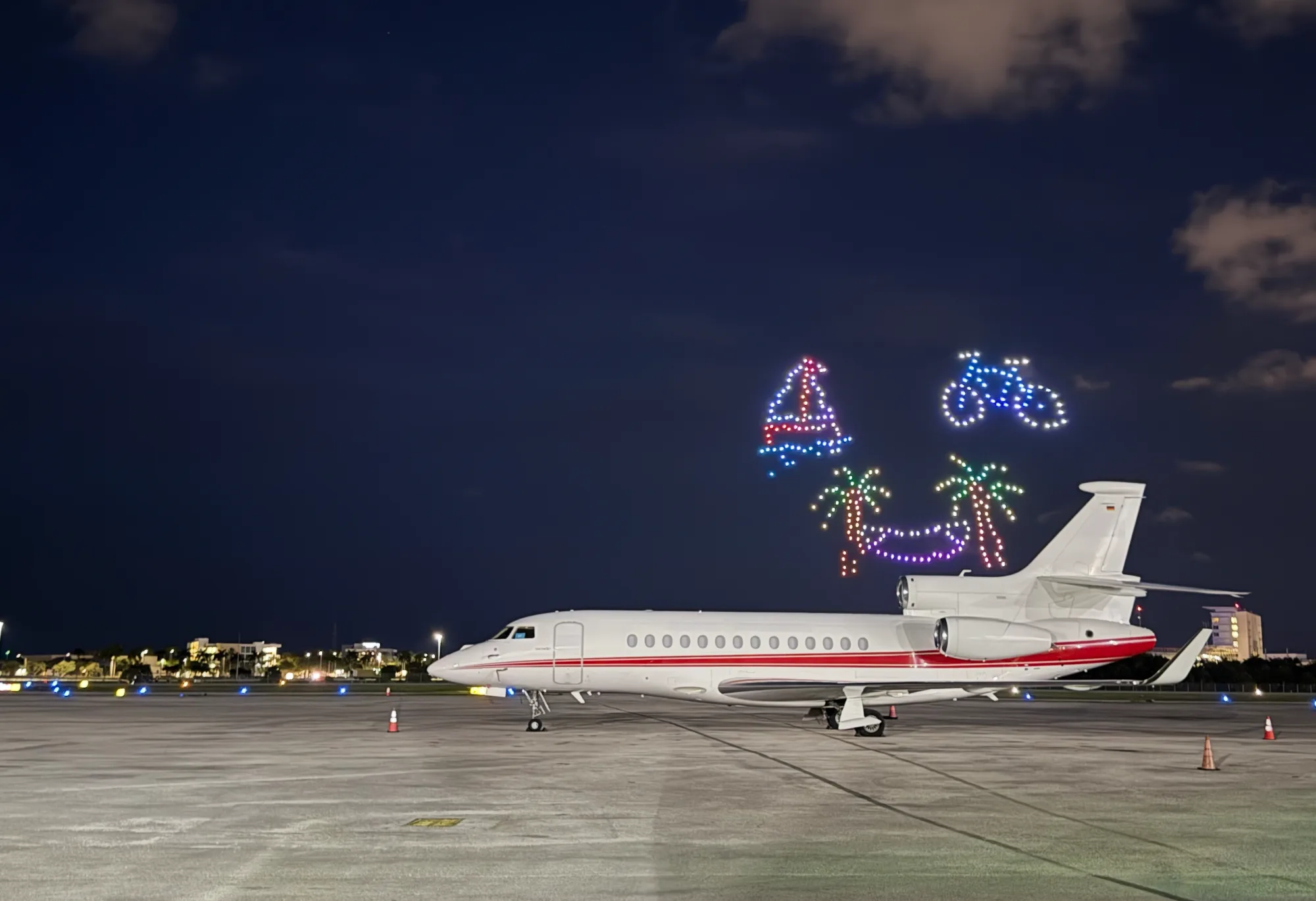
What Is an FBO in Private Aviation?
An FBO — fixed base operator — is the private terminal at an airport. When you fly privately you don't pass through the commercial terminal at all; you drive to the FBO, a separate building on the field, where check-in is a greeting rather than a queue. The FBO handles both sides of the operation: passengers on one side (lounge, concierge, ground transportation, customs where applicable) and aircraft on the other (fuel, hangar space, ramp handling, de-icing, crew facilities). Most passengers are through an FBO and onto the aircraft in minutes.
The name is a piece of aviation history — "fixed base" distinguished permanent airfield businesses from the itinerant barnstormers of the 1920s — but the modern meaning is simple: it is where private aviation happens at an airport.
What the FBO does for you
Three moments, and the FBO handles all of them.
You drive to the FBO's own address, often to a dedicated lot or straight to planeside where the airport allows it. Bags go from your car to the aircraft hold without you touching a belt.
A lounge with seating, Wi-Fi, and restrooms; larger FBOs add conference rooms, showers, and full concierge service. Most members see the lounge for five minutes.
Checks still happen — they are simply run at the pace of a handful of passengers rather than a terminal of thousands. International arrivals clear customs at FBOs equipped for it.
What the FBO does for the flight
Fuel is the FBO's core business — they are, at heart, the gas stations of private aviation. Around that sit ramp marshaling, ground power, lavatory and cabin service, hangar space, and crew rest and flight-planning rooms. A well-run FBO is a large part of why a private flight departs on time.
The gap between the two columns above isn't marketing language — it's the reason the FBO exists as a separate building in the first place.
A well-run FBO is a large part of why a private flight departs on time.
Who picks the FBO
At fields with more than one FBO, the operator usually selects it — fuel contracts drive the choice. If you have a preference, say so when the trip is planned; a specific FBO can usually be arranged, sometimes with a surcharge, and it's worth it if ground logistics matter to your day.
The Bitlux desk works from 3300 Airport Rd at Boca Raton Airport (BCT) — on the field it plans from. If you want to know which FBO your route uses, or you have one you prefer, ask the desk; it is the kind of detail the house plans rather than leaves to chance.